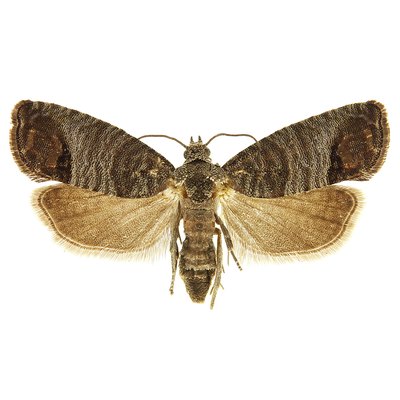
Mating disruption (MD) is one of the most environmentally friendly pest control methods recognized by regulators worldwide — including the US EPA and California DPR. Yet many growers who could benefit from it hesitate because the mechanism sounds abstract. Here is what actually happens in your orchard.
The Problem: Moths Find Each Other by Smell
In moth species that matter to agriculture, the female emits a species-specific blend of chemicals — a sex pheromone — that drifts downwind as a plume. Males fly up the plume's concentration gradient to locate her. One successful female can produce dozens to hundreds of eggs, so every mating that completes is future damage.
The Mechanism: Flood the Air with False Signals
A mating disruption program releases the same synthetic pheromone — from hundreds of dispensers per hectare — at concentrations far above what any calling female can match. Three effects follow:
- Plume masking: the female's faint signal disappears inside the ambient pheromone cloud.
- False-trail following: males chase dispenser plumes and exhaust themselves finding nothing.
- Sensory fatigue: constant high-dose exposure desensitizes male antennae temporarily.
Net result: males fail to find mates, the reproductive cycle collapses, and pressure declines generation after generation. And because nothing is killed — mating is simply prevented — insects cannot evolve resistance to it, and non-target species like pollinators and natural enemies are untouched.
The 10-Hectare Rule
Pheromone must stay in the block to work. On small or narrow plots, wind carries the cloud away and males re-enter from outside. Practical guidance:
- Contiguous area of at least ~10 hectares; bigger and squarer is better.
- Best at low-to-moderate pest density — at high density, use a knockdown spray first.
- Apply before first flight of the season so the first generation already fails to mate.
Verifying Success: Trap Shutdown
Here is the elegant part: keep monitoring lures inside the MD block. If the program works, those traps catch nothing — captures fall to zero because males cannot orient to any pheromone source. This "trap shutdown" is your season-long proof of effectiveness. External traps around the block perimeter show whether populations are declining year over year.
Choosing a Supplier
Release rate consistency is everything — a dispenser that runs out mid-season leaves a window for mating. Pherobio manufactures dispensers in-house with batch-verified loading, covering codling moth (Cydia pomonella), European grapevine moth (Lobesia botrana), oriental fruit moth (Grapholita molesta), rice stem borer (Chilo suppressalis) and more. See the full mating disruption line or contact our team for a density plan for your block.
Key Takeaways
MD floods the crop with synthetic sex pheromone → males can't find females → no mating, no next generation. Requires ≥10 ha contiguous area and low-to-moderate initial density. Verify with trap shutdown. No resistance, no residue, no harm to beneficials.